How do I interpret the Triple Factor Hearing Screener test results?
Understanding the Sound Scouts scoring scale: Pass, Borderline, and Fail.
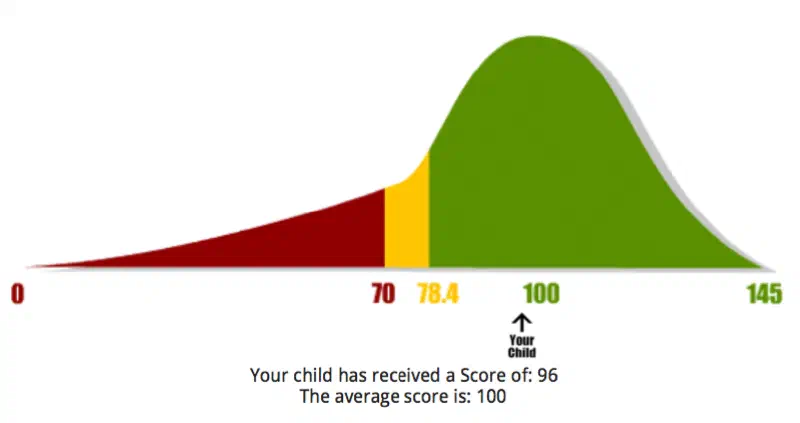
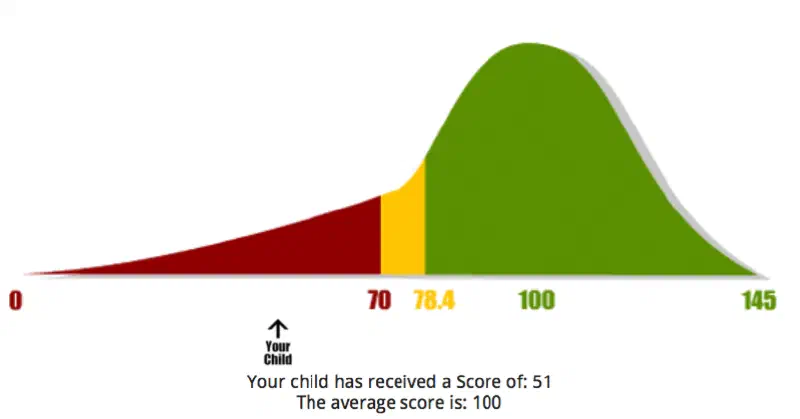
Sound Scouts results use a scaled score:
- The average score for a child with no hearing issues is 100.
- One standard deviation below average is 85; two standard deviations below is 70.
- A score above 78.4 is a Pass.
- A score between 70 and 78.4 is Borderline.
- A score below 70 indicates a likely hearing issue.
What do the results mean?
Pass Result
If the player receives a Pass result (score in the green zone), the report states that the player’s hearing is within the normal range for their age group.
If you have ongoing concerns about the player’s hearing despite a Pass result, we strongly recommend seeing a GP or hearing professional.
Borderline Result
A Borderline result means the player’s hearing score is on the edge of the normal range. It does not necessarily indicate a hearing problem.
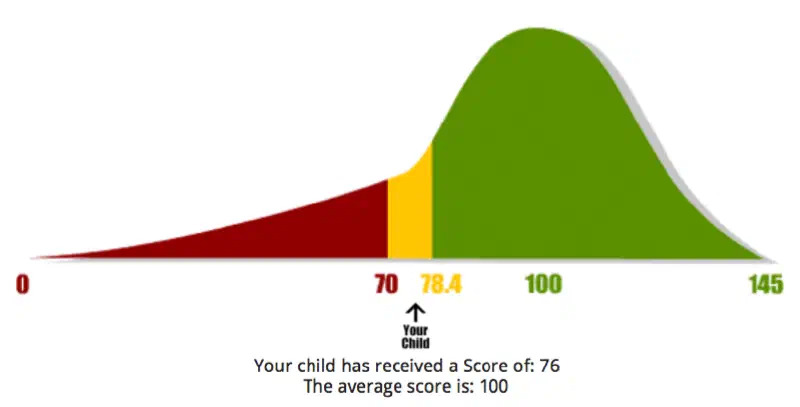
When a Borderline result is received, it is recommended that the player is retested after 24 hours in a quiet environment. If the player receives a similar result on retesting, further investigation by a hearing professional may be warranted.
Fail Result
If the player receives a Fail result (score in the red zone), it is recommended that the player is retested after 24 hours in a quiet environment. If the player receives a similar result on retesting, further investigation by a hearing professional is recommended.
Middle/outer ear (conductive) hearing loss
The report will recommend a visit to a GP. A middle or outer ear issue (such as a build-up of wax or fluid) can often be treated, and hearing typically returns to normal with appropriate care.
Inner ear (sensorineural) hearing loss
The report will recommend follow-up with Hearing Australia or a hearing specialist. A Sound Scouts Fail result indicating sensorineural loss is accepted as a referral for a Hearing Australia appointment.
Difficulty hearing in noise
The report will recommend follow-up with Hearing Australia, a speech pathologist, or an educational psychologist.
Potential causes of difficulty hearing in noise include poor attention, language disorders, English as an additional language and auditory processing disorder (APD), which is related to the brain’s ability to process sounds. Children who experience difficulty hearing in noise can typically hear in quiet environments but struggle in noisy environments like the classroom or playground.
In Australia, two Sound Scouts Fail results indicating sensorineural loss is accepted as a referral for the purposes of obtaining an appointment with Hearing Australia.